Rejection (or who are we to judge?)
I've had a lot on my mind lately. I think we all have. And that could be the source of the block. And maybe block isn't the right way to explain it. I do have ideas I jot down for writing topics. Some include my personal position on AI, a re-reading and review of Donna Haraway's A Cyborg Manifesto, exploring work as a generalist, and more.
What I'm writing about today fell in my lap last week. In the interest of chasing impulses, I decided to run with the idea. I hope you are chasing ideas, too. They're still out there and generally a salve for overwhelming times. Let's begin.
I don't like competitions. But in the last couple weeks I entered and judged a competition. Both make me uncomfortable. But, I gave each side my best effort even with reservations. In the end they had fairly predictable results. And I still feel uncomfortable.
I hate competition. I find it tiring and generally reductive. The old (capitalist?) adage is that through competition all sides improve their work as they strive to outdo another in product and value. Malarkey I say! So I thought for this edition of the newsletter I would explore why creative disciplines compete, what does it mean to win or lose, how to judge creative work, and are there better ways to get recognition, validation, inspiration, and confidence?
Why compete
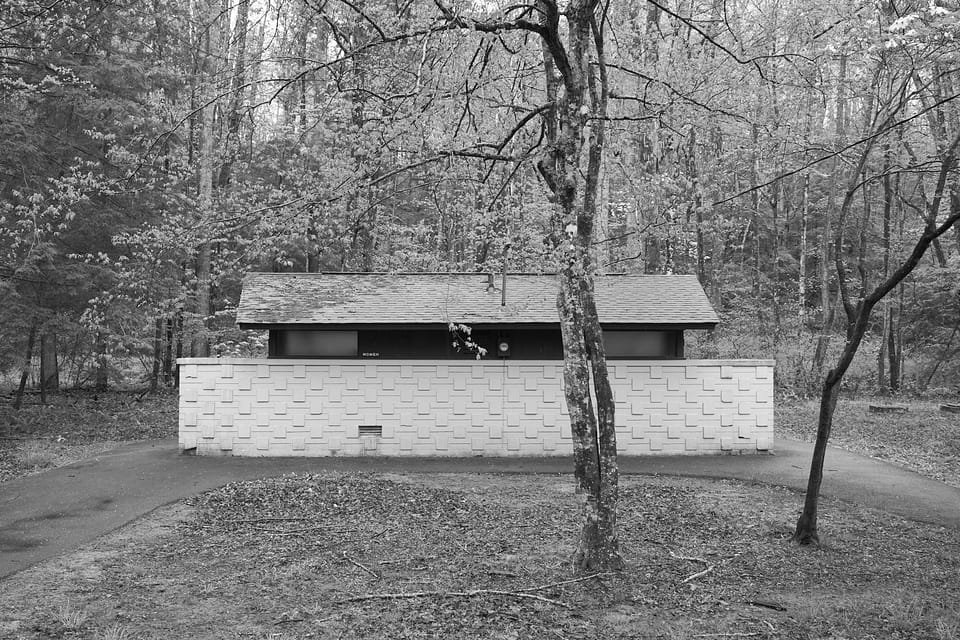
Nature photography is a category where there is little gray area for what it encompasses. Shallow depth of field, central object of focus, and large zoom lenses capture stunningly detailed and saturated images of flora and fauna. I recently entered a nature photography contest with a black and white image of a modernist/geometric bathroom facility in a clearing at Smoky Mountains National Park. I shouldn't have been surprised when this and none of the other photos I entered were selected by judges for exhibition. But I was.
I've practiced photography for over 30 years. It's been largely a personal pursuit (a way to hone observation, collect places, and explore theme's over time) that genuinely gives me joy just by the act of doing. It forces me to stop. It makes a place and time special. It tells an open story. And I enjoy a good practice.
I rarely print because I don't enjoy processing images and until lately didn't have suitable equipment for making prints. But I do find it valuable to share images. Flickr was a good friend for years, then Instagram, and now Pixelfed have all been low stakes ways to share what I do and get a general audience and hopefully appreciation for the work I make. I've always seen art and design as social pursuits—a way for you and others to make sense of the world. Why do I need recognition?
Working alone and making a body of work on your own has its ups and downs. There's very little distraction and interruption. It can be indulgent and positively discursive. But it can also be limitless and isolating. Regardless of the recognition, submitting my work to competitions is a way to complete images, assemble them into a set, and share them to a wider audience. This is valuable. Feedback is valuable. And so is validation and recognition. A little puff in your sails can really keep you moving.
Win or Lose
Most competitions are entirely binary—you are either selected or not. Better competitions utilize rubrics or auditable measures to make their selections. Many simply have a credentialed judge or panel of credentialed judges with expertise who make decisions outright and offer no feedback on how they arrived at their conclusions.
Winning feels great.
Losing doesn't.
Art and design (and most other things we do in life) are complicated. Many decisions, perspectives, and limitations go into making. There's a story around everything we make. Work can be successful if it addresses an intended purpose. Good work meets or exceeds that purpose. And without getting too squishy, great work can move us into the sublime. A lot of factors go into understanding and criticizing creative work—context, familiarity, location, venue, mood, environment, expertise, naiveté, posture, appetite, fatigue, stressors, etc. There's a lot of gray area.
That's always made competing feel disingenuous to me. Competitions analyze only a specific slice of work. That can be a benefit to some, but I take the wider view of what is success in creative work. Winning can't be purely visual or conceptual, nor can losing.
Judge or be judged
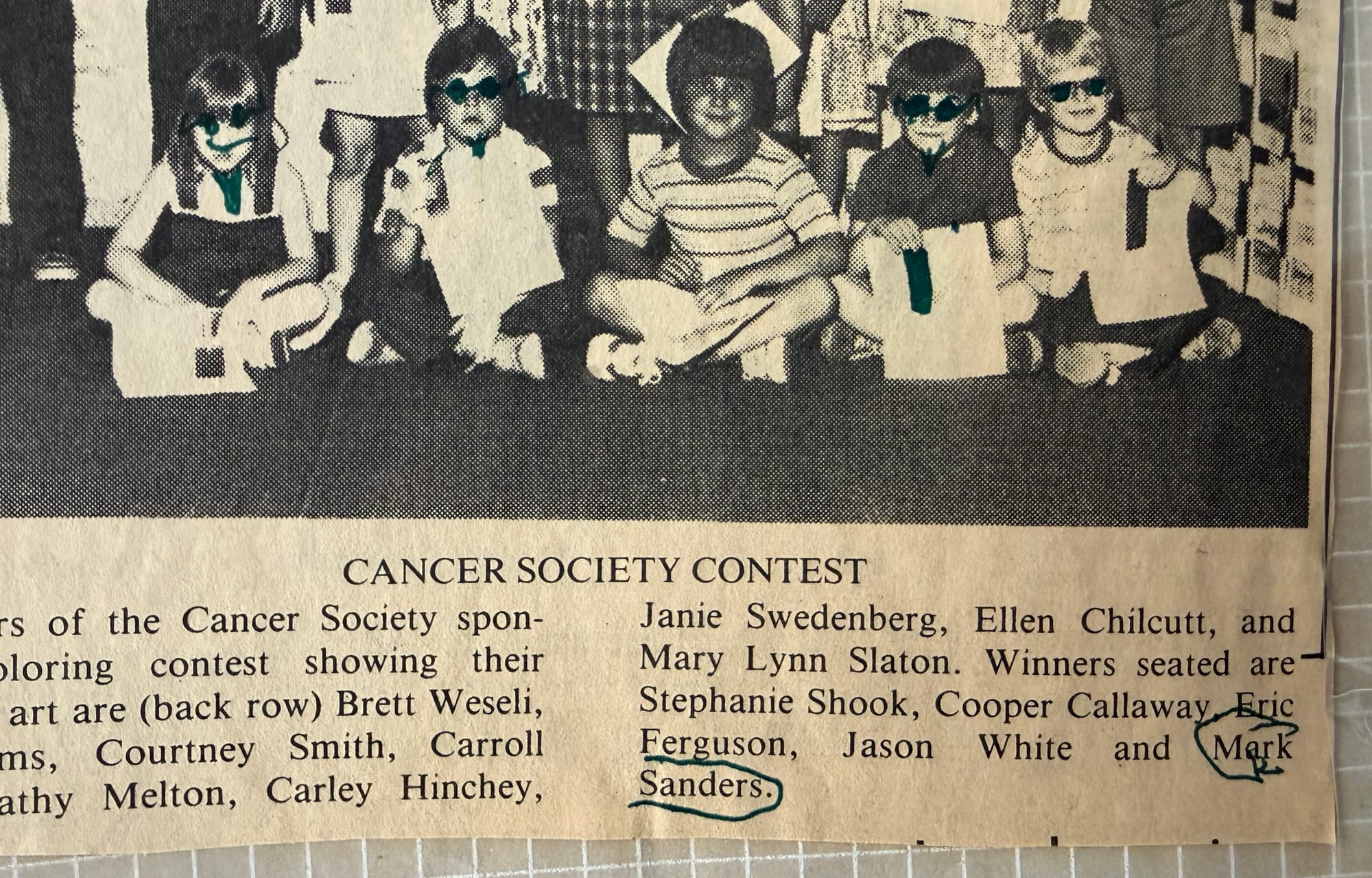
It's not often I am asked to judge a creative competition. If I'm honest I try to avoid it. But if someone I admire thinks I might be useful in assessing work, it's an honor. Recently I was asked to judge and award eight prizes for a high school art exhibition. I agreed, but knew it would be hard for me.
The work was hung in sprawling a gallery, née cafeteria. There were 100 or so flat, sculptural, and kinetic pieces made with paint, graphite, pen, digital print, camera, clay, vellum, wood and more. Themes included portraiture, landscape, experiments, still lives, and posters. Name plaques with graduating year accompanied each piece.
Everything I outlined above made completing this task uncomfortable. And there were scant guidelines for selecting winners. I looked at all the work three times. I tried to establish themes across the pieces. I looked for solid technique and technical outliers. I considered experience and maturity.
On paper it could be said I have a lot of experience 'judging' with 20 years in the design education classroom, although I never viewed studio critique as picking favorites or what's the best. This doesn't mean some work isn't noteworthy, but I got to see the entire thinking and making process which changes how you appreciate what you see. Something may not look impressive, but it could represent a great leap for student, artist, designer, and/or client. These affordances can be impossible to make in a traditional competition.
Judging and being critical are two different operations. To criticize is to take into account a wider array of parameters that went into making work. A good critic can consider idea, audience, capabilities, context, successes, as well as shortcomings while offering both praise and recommendations for improvement. This, to me, is a more natural and nurturing way to build credibility, show your work to others, and build confidence in what only you can create.
Make work and share it
I don't want to sound like a sore loser. I also don't want to discourage evaluating work relative to others. But a thumbs up/thumbs down approach is rarely helpful.
Artists and designers should put their work out there. How you do it, though, matters. Write about it, post it, join a group, take part in a critique, or simplify feel as satisfied as you can that you did your best with the resources and conditions available. If there are accolades, let them humbly fill your sails and propel you to the next thing. And if there are not, be satisfied accomplishing something that matters to you.
Unlike the binary nature of competitions, success is a continuum with plenty of space to explore. Defining your own parameters of how you've succeeded (or fallen short) with a project or piece of work holds more enduring value than a thumbs up from someone who is likely unfamiliar with what you've known about your work all along.
New-to-me Idea
"...a tradition of mimetic experimentation in the late nineteenth century, whereby morphologists sought to scale down sublime natural phenomena to tabletop devices in the laboratory."
~via The Landscape Architecture of Auroras on Demand by Geoff Manaugh on BLDGBLOG
New-to-me Thing
Archaeoacoustics is the study of the acoustic properties of cave-paintings. "The Artsoundscapes project leaves little doubt that prehistoric artists deliberately painted in places where echoes, resonance and sound transmission created otherworldly sonic effects."
~via the excellent < Linkfest > by Clive Thompson and NewScientist magazine.
Comments ()