...Finishing
An anecdote to start this edition...
I fell in love with idea of designing my own house when I was a teenager after regularly watching episodes of This Old House. I was told someone who designs houses (and other building incidentally) was an architect. Ok, then I want to be an architect.
Four years of undergrad and a couple of months learning CAD later, I landed a contract position at an architecture firm measuring buildings for as-built drawings and inputting them into AutoCAD. From there I worked at several firms on a couple of large new construction projects and noticed something: most of the buildings I worked on either never were built, or they were interminably delayed. In 6 years of working in architecture only one spec office building project was ever finished.
I asked myself, what is a design that could be finished? Books. Logos. Posters. Graphic design could be finished—so I thought.
I made the career switch and in nearly 25 years of private practice and teaching I now know design is never finished. And that's actually its superpower. Mutability, adaptability, flexibility all allow a richer approach and extended outcomes. Ive come to learn time is actually a principle of design.
Finish
To finish is to come to an end—or it can mean applying a coating that endures. I suppose an ending can last, but it's the application and endurance that hold value for me in feeling finished with an endeavor. The process and the temporality of the results combine to make something that lasts. That's exciting!
The first time I realized ending wasn't the purpose of work was designing and building early websites. In the early days of web, a launch meant all the content was in place, accessible via links, and styled to aid hierarchy and navigation. Adding new pages was not for the inexperienced website owner. So a launch not only meant the culmination of months of work, but also the beginning of a static archive. Maybe there was an ongoing contract for content updates, but generally most websites sat for months and years without any tending. I had a colleague say "finishing a website marks its death."
Blogging changed that. Through a web-based interface, authors could simply add and structure content on their website at any time with very little specialized knowledge of markup or server technology. And changes / additions would show up online more-or-less immediately. Previously static websites became a dynamic collections that never had to an end—only limited now by time, purpose, and enthusiasm.
Products are now never done. Even my stalwarts of completion in graphic design (books, logos, posters) keep going, being adapted to maintain their endurance. My partner and I have had some success revising classic graphic design texts to make them more amenable to work that is temporal, ephemeral, and iterative. A book can be recomposed as well as amended. The process can be the product. And as such, the finish will change over time.
Unending
This isn't new. Movable type, illuminated texts, Dada, land art, sampling and other forms of making expressly transform their application and finish. The act of doing and how they change is part of their purpose and their value. What's challenging now, is nothing really seems to be finished. After all, part of finishing is coming to an end.
I've been looking for ways in my own work to manage and even embrace the unending nature of work. A big part of how I work is starting (and not really finishing) a lot of things, especially adjacent to my immediate projects.
In 2022, Metalabel outlined a new working structure that I think is helpful milestoning and wayfinding for unending work. A release mark the completion and distribution of a play, album, book or other volume. Factory Records' catalog includes the typical album releases, but includes significant accomplishments as releases, too (see FAC 51 in their catalog or FAC 136 'Factory Cellotape in green with new logo'). Cataloging or indexing gives a cadence to work that has no defined end point. These markers are not only a reminder of what has been done, but also are a dare to make new connections or to refinish some of the pieces.
It's also very worthwhile taking a look at how The Wide Awakes operate. As a platform for cooperation and collaboration, their approach to radical creativity and multiplying their movement in unending directions is superb.
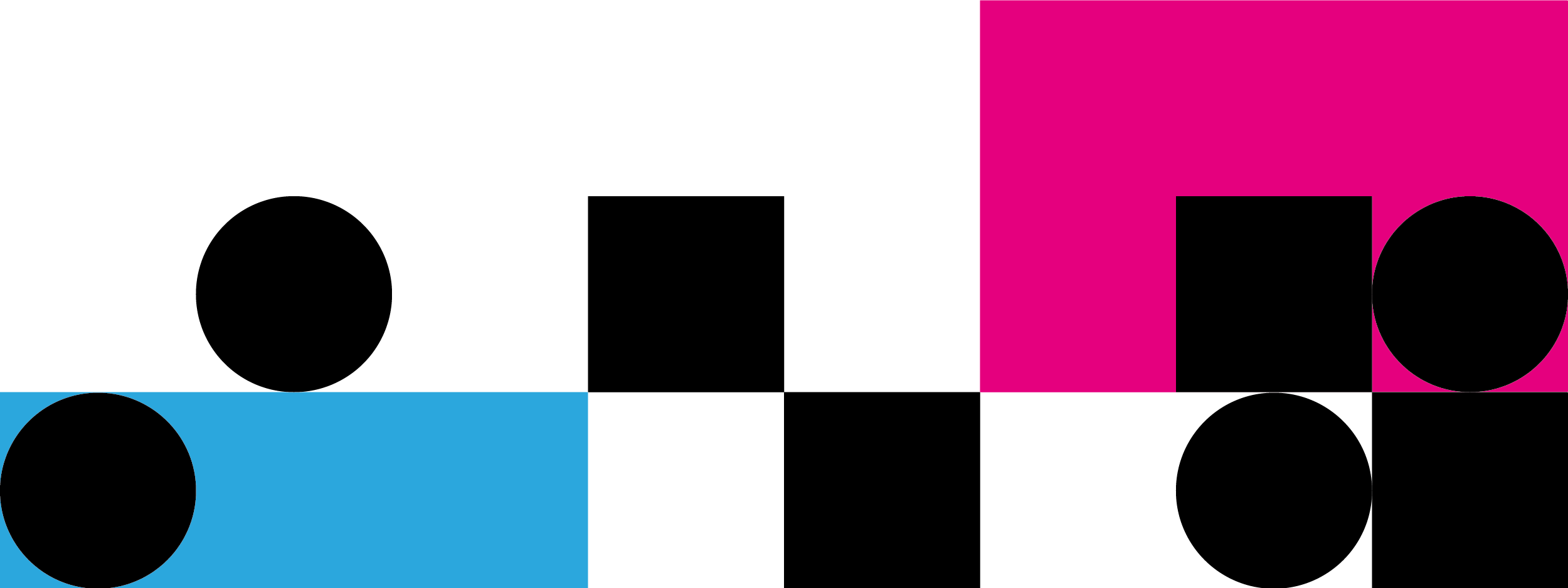
For years I taught and pitched to clients the idea of 'flexible identities' as outlined by the lovely book Identiteiten / Identities: 5 design proposals for a house style. In it, the process is detailed for requesting design proposals, selection, and application of a new identity for the city of Rotterdam that was selected as the Cultural Capital of Europe for 2001. The graphic design firm Mevis and Van Deursen from Amsterdam proposed a novel kit of parts to represent the cities within a city, along with the geography. Through shape, pattern, grid, color, and alignment a variety of cohesive symbols could be assembled for a wide array of applications and mediums with practically no end in sight.
Never Finished
What if a goal or trajectory is not to finish? Many pursuits and interests move into phases of care and maintenance. No significant new actions are taken, but the idea, object, or project must be maintained to remain relevant or keep from falling apart. I won't lie, this is my least favorite part because it generally only involves fixing problems—something that has gone wrong. But there is a resilience in the maintenance phase and more subtly a change. Endurance is part of a finish as well as a new layer of protection, vitality even.
Trying to embrace never being finished, my work has been pivoting to community building (see Edition 2 of this newsletter). I've been twisting interaction design specifically into a kind of folk art pursuit that tries to express cultural identity by conveying shared community values and aesthetics through digital interface, architecture, and experience. Through contribution and moderation, comes the care and maintenance.
Gutsy Radio is a community building project. The design of interface, technology stack, live chat system, and a common love of live radio has transformed the station into a listening club. Musical taste can be polarizing, but being open to and respectful of all kinds has built a devoted (and I believe resilient) community. It is a lot of work from a lot of people, but this community generates more than it consumes.
And with that, I'll leave that thought unfinished...
New-to-me Idea
"phantom obligation: The guilt you feel for something no one asked you to do."
~via Terry Godier
New-to-me Thing
Current is a new idea for how to use a RSS reader. Instead of an unending feed of stories, this interface sets a velocity for the content by the user specifying a half-life for how long various types of news remain in the feed. Note: this is intended to remedy phantom obligation.
Comments ()